2013 Outstanding Emerging Researcher Award presented by the Center for Music Education Research

I was extremely honored to receive the Clint Randles presents the award to Matthew ThibeaultOutstanding Emerging Researcher Award, presented by the Center for Music Education Research at the Suncoast Music Education Research Symposium at the University of South Florida. I was particularly moved after hearing the exemplary papers of the conference, many of which will find an audience through a book Clint Randles is editing.
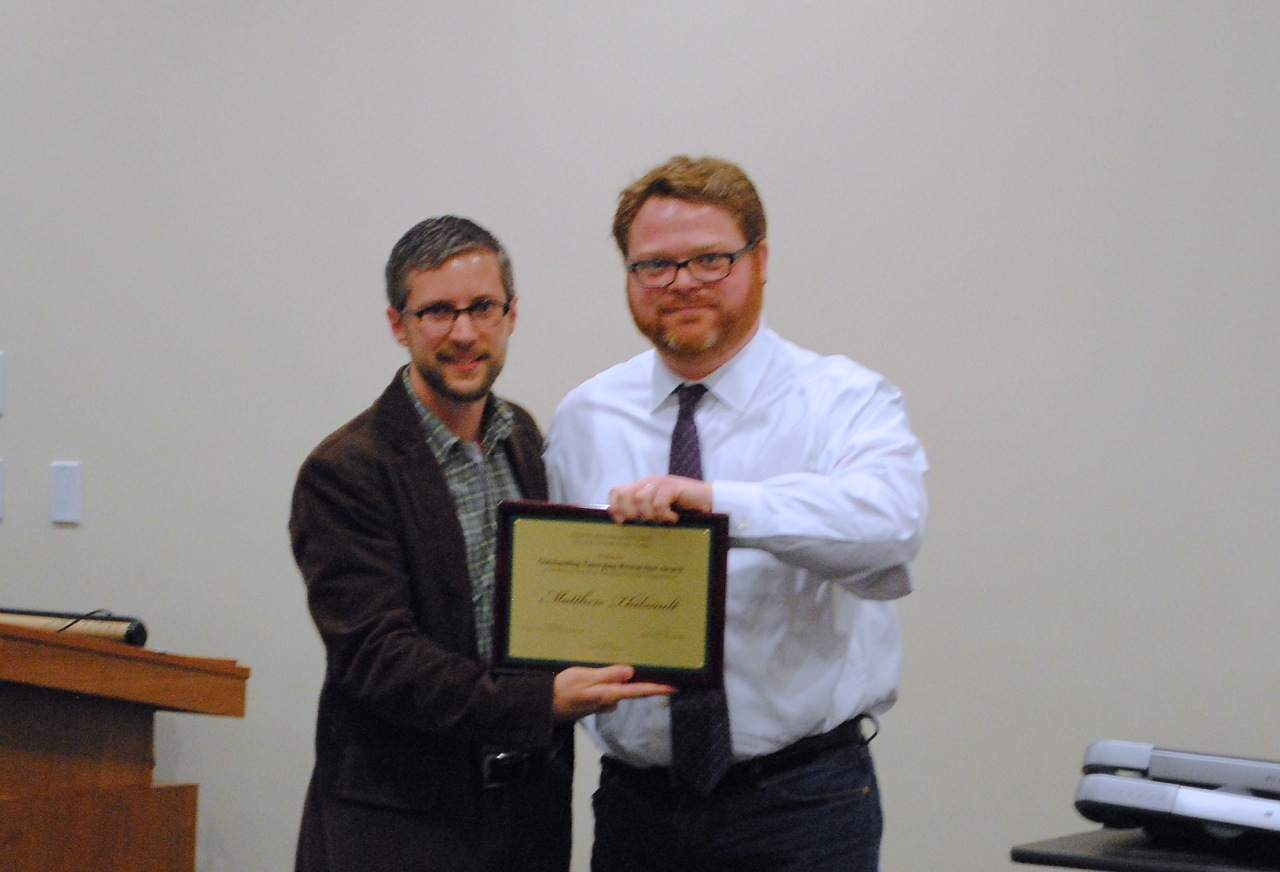
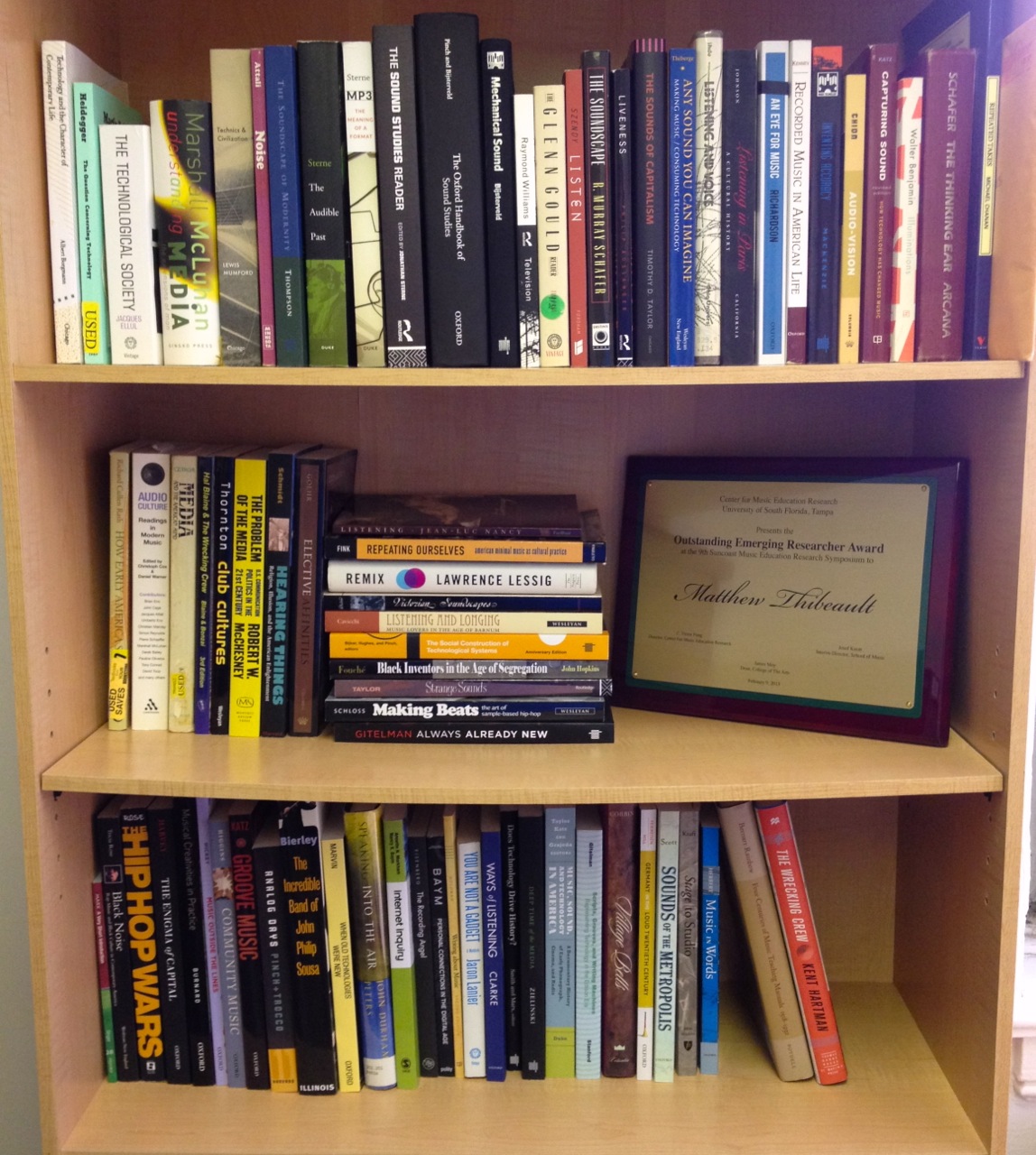
Image of the plaque on Thibeault's bookshelf

The plaque resides on my shelf at the Illinois Program for Research in the Humanities, where I am a Faculty Fellow at work on a related book.

[Edit: My paper, The Shifting Locus of Musical Experience from Performance to Recording to New Media: Some Implications for Music Education has been published. For the conference, I prepared brief remarks, drawing on my paper to set up a discussion, and for those interested in the basics of my paper I have posted those remarks on IDEALS.

For those considering attending the next SMERS Conference (2015), may I leave you with Continue reading

Posted in Uncategorized | Tagged , , , , , | 1 Comment

A draft manifesto on virtual ensembles in music education

How might music educators expand their consideration of virtual ensembles? From Eric Whitacre’s Virtual Choir to the YouTube Symphony Orchestra, to the PS 22’s chorus, there are an increasing array of ensembles with a substantial Internet presence. The term “virtual ensemble” is itself ambiguous (some would say these are virtually a real ensemble), but it seems to be sticking. I find that students and faculty are interested in VEs, but there is not yet much out there.

For those curious to start thinking critically about VEs, here’s a collaborative manifesto from my undergraduate music education technology course. They tried to assess the good, bad and problematic, and comments are welcome! (Thanks to the students in MUS 243, and Chris Cayari, the TA for the course.) I helped a bit with the discussion, but the end product is truly the work of the students. Here’s a PDF version of this content.

Draft Manifesto for Virtual Ensembles in Music Education 

We perceive the following strengths for Virtual Ensembles (VEs):

  • VEs allow musical performances to be accessed by limitless audiences
  • VEs allow a diverse community from different places to be a part of something together
  • VEs allow a social and musical connection across space and time
  • VEs allow for a varied palette of interpretations, supporting diversity of expressions Continue reading
Posted in Uncategorized | Tagged , , , | 1 Comment

The Sense of Technological Determinism [ATMI paper]

Update: the paper I presented has been published as a co-authored chapter:

Ruthmann, S.A., Tobias, E. S., Randles, C., & Thibeault, M. D. (2015). Is it the technology? Challenging technological determinism in music education. In C. Randles (Ed.), Music education: Navigating the future (pp. 122–138). New York, NY: Routledge. [Amazon and my section is derived from this publicly available paper.]

I’m delighted to be taking part in “Is it the technology? Challenging technological determinism in music education,” at the ATMI/CMS/NASM conference (November 16, 2012).

Here’s the short paper I’ll present, “The Sense of Technological Determinism.” In it, I make a case that we have to understand how determinism makes sense in order to better confront these accounts, and close with some recent scholarship that better accounts for changes that occur in concert with technology. The paper will likely end up edited and expanded and included in something somewhere, so feedback is welcome.

Posted in Uncategorized | Tagged , , , , | Leave a comment

GLS Proceedings published

I had the pleasure of working on some really interesting musical games with a team of researchers based here at the University of Illinois, and a paper we wrote has just been published in the GLS 8.0 Proceedings. I’ve added the paper to my publications page, or just click here. The proceedings are freely downloadable under a CC license, or you can purchase a bound copy. Our article, “Developing games that can create real heroes on real guitars: Using acoustic musical instruments and the human voice as controllers” begins on page 269 in the proceedings.

To download the games, visit my previous post (Mac-only at this point).

Posted in Uncategorized | Tagged , , , , | 1 Comment

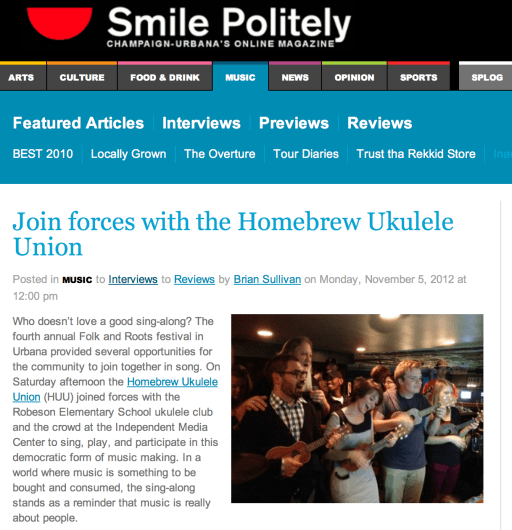
Two new articles on the Homebrew Ukulele Union

Click to view either one, and thanks to the authors for getting the gist of the group beautifully. As always, you can also visit the home of the HUU online: http://homebrewukuleleunion.wordpress.com

Posted in Uncategorized | Tagged , , | Leave a comment

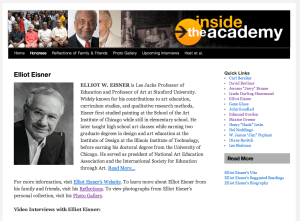
Elliot Eisner is Inside the Academy

I was asked several months ago to contribute some remarks for an episode of Inside the Academy, ASU’s version of Inside the Actor’s Studio. The episode features the work of my mentor, Elliot Eisner, and the video and supplementary materials are wonderful.

For those who’ve read Eisner, or the dozen or so others including Jerome Bruner, Linda Darling-Hammond, Maxine Greene, Lee Shulman, this is a great way to bring the thinkers to life in their own words and those of friends and students. Highly recommended. My remarks are in the separate section “reflections on Elliot Eisner.”

Posted in Uncategorized | Tagged , | Leave a comment

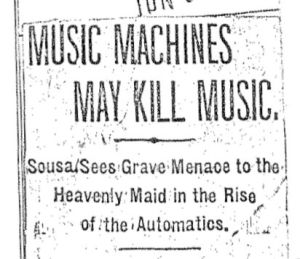
The “Menace” of John Philip Sousa: Sound Recording, Media, Amateurism, and Music Education

This talk is part of a larger project I am working on at the Illinois Program for Research in the Humanities, and also an opportunity to hear from and talk with Jonathan Sterne.

Here’s the paper of the talk I presented.

Here are the slides from my talk, with images courtesy the Sousa Archive. Slides from the Sousa talk.

Here is the tweet from NAfME.

Posted in Uncategorized | Tagged , , , , , | Leave a comment

Introductory remarks for Cary Nelson’s speech (with links)

[Here are my introductory remarks, with links to the organizations, books, and resources I mentioned.]

I am truly an honored to introduce our speaker, Professor Cary Nelson.

An omnipresent issue facing our profession—and the theme of Professor Nelson’s talk—is academic freedom. My colleagues and I have personally benefitted from Cary’s expertise. A capsule version of the story is that, returning from CIC-Wisconsin two years ago, we drafted an open letter to students concerning a controversial event held on campus that directly involved music education students.
The response to our letter raised significant criticism, including from Tim Johnson, our local U.S. Congressional Representative, who referred to us as, “self-appointed thought police” who had crossed an “ethical, if not a legal, boundary” to “bully young students” (Champaign News-Gazette, November 13, 2010). As the media storm raged an open letter by Cary saved the day, forcefully arguing that our efforts were protected in the course of, “fulfilling our professional responsibilities in urging students to reflect on the role that the issue could play in their careers.” During a difficult time, Cary’s thorough understanding of academic freedom came to our rescue, and we remain grateful.

Cary’s understanding of academic freedom is theoretically rich, Continue reading

Posted in Uncategorized | Tagged , | Leave a comment

Homebrew Ukulele Union (HUU)

For those at CIC, here’s the first of several follow-up or concurrent posts for the aspects where I’ll be involved. Much more can be found on our blog: http://homebrewukuleleunion.wordpress.com or through the co-authored GMT column (with Julianne Evoy).

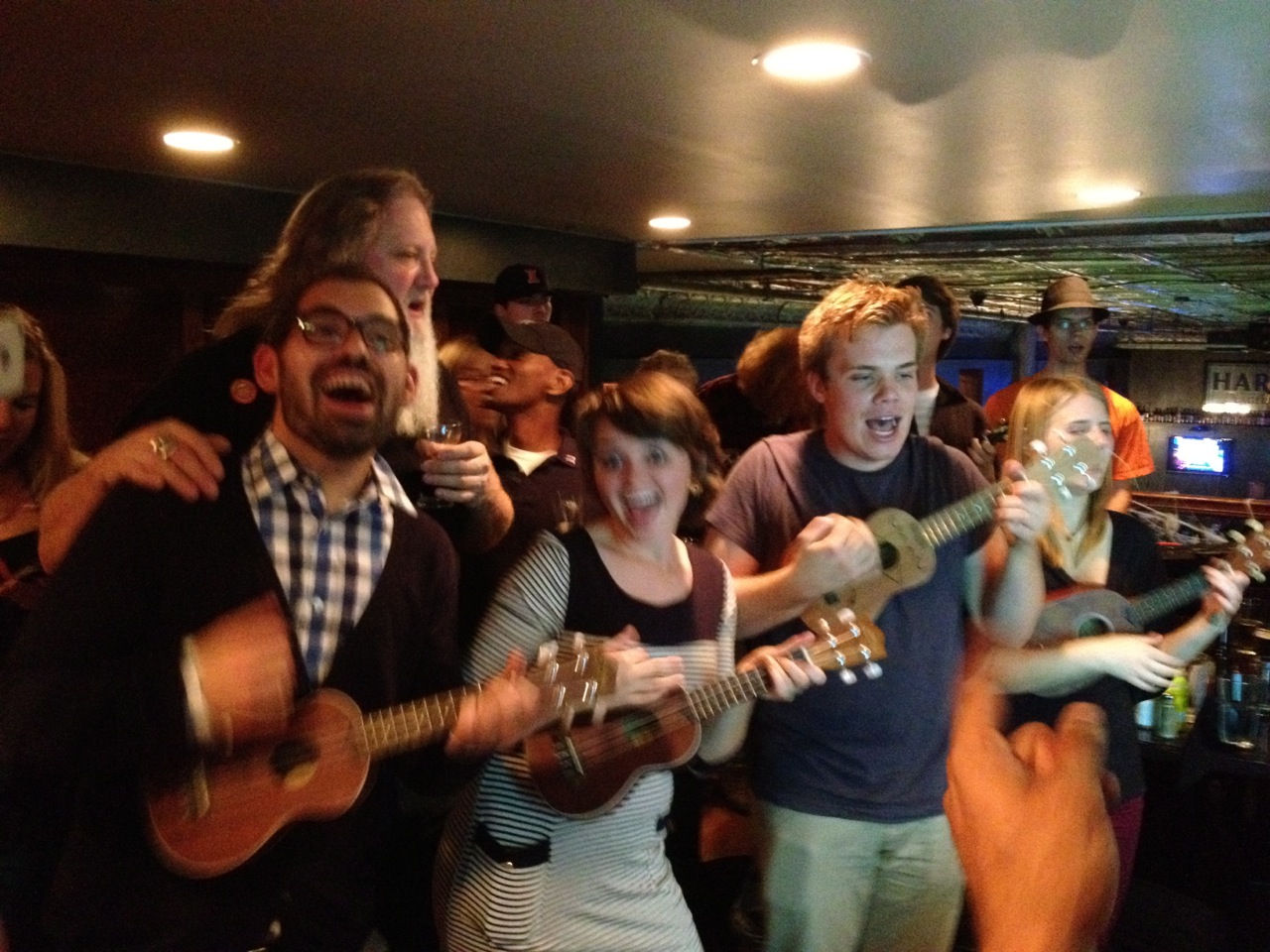
The Homebrew Ukulele Union is a group that played at Crane Alley. The group was founded in 2008. Despite growing out of the class MUS 438: Designing Musical Experience, we also include members of the community, former students, and total strangers.

We’re largely influenced by the work of my colleague in ethnomusicology, Tom Turino, to work as within the participatory field. Everyone who participates is part of the group. We draw on shape note pedagogy, the DIY punk ethos, and build our instruments as a focal practice, following the work of philosopher Albert Borgmann. You might also enjoy a dissertation where mass-produced music is reclaimed as participatory (through the Beatles class at the Old Town School in Chicago) by Tanya Lee.

Here’s a few photos from last night:

Posted in Uncategorized | Tagged , , | Leave a comment

UIUC CIC 2012 Conference (details and support for my part in the festivities)

CIC is coming, along with the 2nd Symposium on LGBT Studies and Music Education. Full schedule and details at this link. My colleagues Jeananne Nichols and Bridget Sweet are co-chairs have worked tirelessly, along with the rest of us to make sure we have a great conference. Below are the aspects where I’ll most be involved.

Wednesday, October 17

9 p.m. Homebrew Ukulele Union sing-along
The Homebrew Ukulele Union will share a sing-along after the opening night reception, part of the traditional pool tournament. Members and friends, as well as all conference attendees, are invited to bring or borrow a uke and join us (Starting around 9 p.m. at Crane Alley). Continue reading

Posted in Uncategorized | Leave a comment